
If you are running a deep tech, space tech or biotech project, or working in any field with a strong scientific foundation, you probably think of marketing as something that happens at the end. You put it off until the technology is ready and someone needs to “package” it in a nice presentation.
In other words… it is probably not your favourite subject ;) So you leave it until the last minute.
For many engineers and scientists, marketing means social media, advertising and pointless LinkedIn posts. Things that feel a long way from developing a satellite navigation system or a complex algorithm. And if that is how you see marketing, I can hardly blame you for treating it as a low priority.
Unfortunately, that association is understandable. The meaning of “marketing” has become much narrower in recent years. With this article, I would like to return to a broader understanding of it.
Think of marketing as taking a product to market. A complete, identifiable process whose effects show up in a company’s financial results, rather than a series of isolated social media activities.
That process needs to be designed alongside the technology itself. I would go further: it belongs in the project from the very beginning. It deals with the same question as interface design: how what you are building meets someone who needs to understand it before they can appreciate the value it adds.
History offers a few interesting examples. My favourite is horsepower. James Watt used it to express the power of steam engines in terms potential customers could recognise: the work previously done by horses. The commercial challenge was to make the machine’s value understandable to people with a very different frame of reference.
For reference, one metric horsepower—the Polish KM—is approximately 735.5 watts: the power required to lift 75 kilograms by one metre in one second under standard gravity. It is slightly different from the imperial horsepower used in English-speaking markets.
To an engineer, an additional comparison might seem unnecessary. But that is the curse of knowledge at work. It was a way to solve a communication problem between two completely different frames of reference.
Edward Jenner’s smallpox vaccine provides another perspective on the gap between evidence and acceptance. Jenner demonstrated his method in 1796, and vaccination spread internationally soon afterwards. Yet opposition persisted, including fears about using material derived from cows. Scientific evidence alone did not remove the barriers to trust. Communication mattered, alongside practical, social and institutional factors.
These examples are different, but both illustrate the challenge of helping people understand and accept something unfamiliar. Translating a technology’s meaning and value matters. You will face resistance of your own.
That is what I want to discuss today: how to get technology out of the laboratory and into its target market, beyond campaigns, reach figures and the LinkedIn algorithm.
In this article, you’ll learn
- Why marketing starts with your first conversation about the technology.
- How positioning helps people remember what your company actually does.
- Why users, internal advocates and decision-makers need different messages.
- Why waiting until TRL 9 puts you behind before you launch.
Marketing starts with communication
The first thing to recognise is that, in deep tech, every conversation about your technology is part of marketing. Even before anyone thinks about building a website.
Whatever your role—CEO, CTO or lead engineer—when you explain your technology to someone, you are selling in practice. You do it when pitching an investor, speaking at a conference, talking to a technology partner or answering a grant reviewer’s questions. Each situation builds, or damages, the company’s image, whether you call it marketing or not.
There is a practical conclusion here: before you start promoting your company, learn to talk about your technology consistently and in a way that someone outside your field can understand.
That is harder than it sounds, for a specific reason. The deeper you are in a subject, the more you take for granted. To you, those things are obvious. To the person across the table, they may be anything but.
You have probably seen this in meetings. Scientists and engineers focus on demonstrating how much they know, which is natural after years of working on a problem. But the purpose of the meeting is to help the other person understand why the solution matters. Demonstrating knowledge and creating understanding are two different goals. They require two different ways of speaking.
Decision-makers—a programme director, board member or investor—rarely understand your system architecture or technical specifications at your level. Yet they decide whether to fund or implement it. Yes, you are often being assessed by people whose technical expertise is far below your own. So ask yourself: would you rather prove that you know more than they do, or help them understand why your team can deliver the project successfully?
I am talking about how you explain the technology, rather than changing the technology itself. If the market cannot understand the value of your solution, take a hard look at your narrative before blaming the market’s lack of expertise.
What do you want to be remembered for?
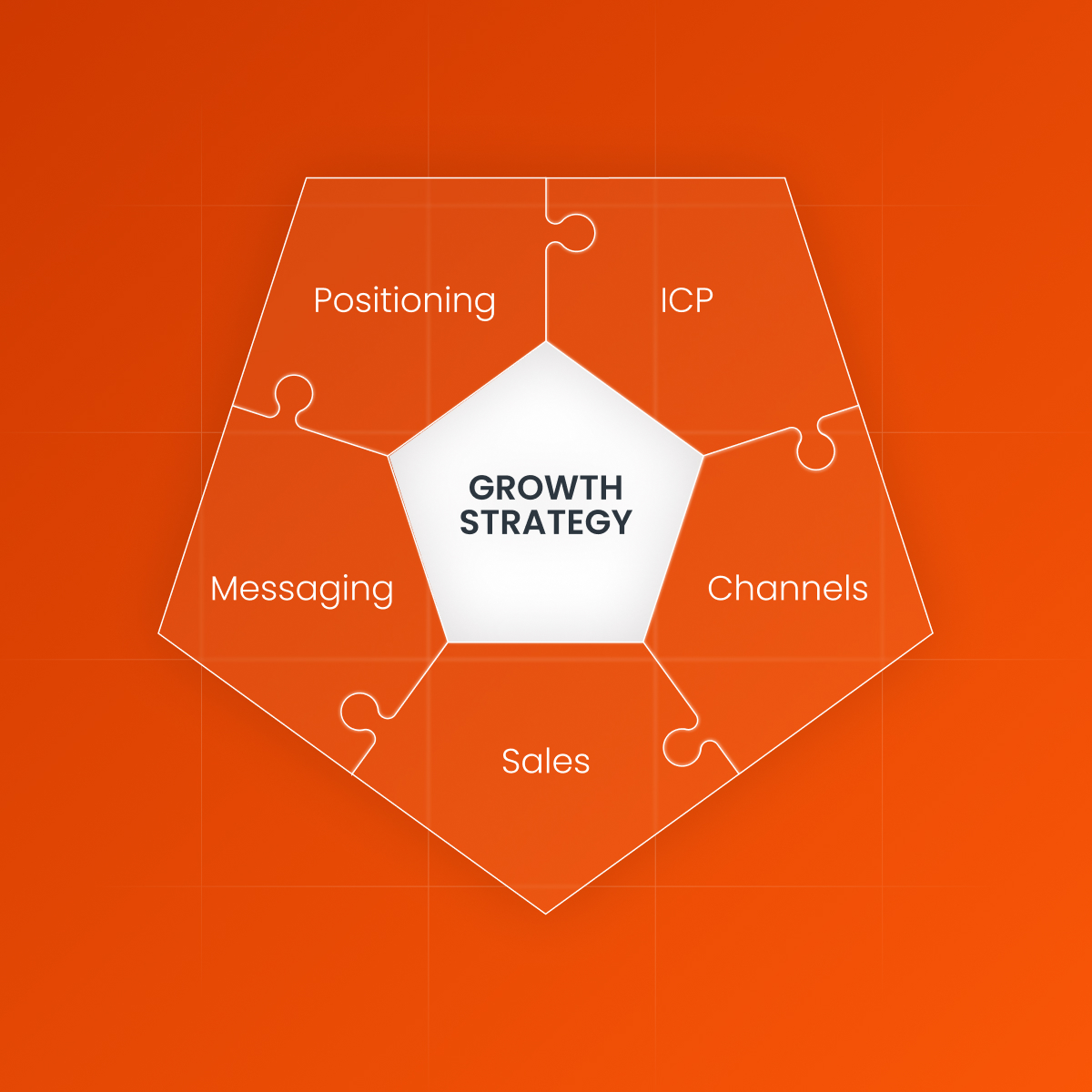
Once you can explain the technology clearly, another question appears: what do you want people to remember after the conversation? That is the essence of marketing strategy. It does not require a hundred slides or months of workshops. Strategy answers two questions: where and who are we today, and where do we want to be in a few years? Everything else is the route between those points.
Positioning is a crucial part of that route: how do you want people to think of you? The market will not remember everything you say. People retain the associations that make the most sense to them. Your job is to shape those associations. If someone hears your company’s name in two years, will they think of precision satellite optics, data analysis reduced from hours to minutes, or “that guy who was talking about quantum something”?
In deep tech, I usually see two approaches to positioning
The first centres on the technology itself. You explain that your solution is faster, more accurate or based on a fundamentally different principle. This comes naturally to people with an engineering background and can work well, especially with technical audiences. It can highlight scientific advances that open up previously unexplored areas.
The second centres on changing the status quo. Instead of describing specifications, you show what changes in the world when the technology is used. This positioning challenges the phrase “we have always done it this way”. Think of the steam engine: it does the horse’s job, without anyone having to clean up the manure ;) Of course, you can imagine the objections: horses are a tradition, part of our culture, and what about the stable hands’ jobs? :) When objections appear, you need to speak the language of value.
Instead of “our system analyses satellite data faster”, you say “emergency services can make a decision several minutes earlier”. Instead of “the algorithm is more accurate”, you say “it reduces false alarms, allowing operators to focus on real threats”. In both examples, the technology stays the same. The frame of reference changes.
Clear positioning has another very practical function: it aligns the whole team’s communication. When the CEO, CTO, engineer and conference presenter tell the same story—with their own words but the same message—each conversation strengthens your image instead of rebuilding it from scratch.
Here is a simple test I recommend to every company: ask each team member, independently, to describe the company in two sentences. If the answers go in different directions, agree on a shared message. You can do it today, for free. It will help people understand your solution because every separate conversation will contribute to a consistent picture.
You sell to institutions. A person makes the purchase.
Once you know what you want to communicate, the next question is: to whom? This is another common deep tech problem: thinking of the audience as an institution. “Our customer is the military.” “Our customer is ESA.” “Our customer is the public sector.” But decisions are always made by specific people. Each person assesses the same technology against different priorities, even when a committee makes the purchase.
Take a company that has built an autonomous drone designed to remain operational under interference, using local data processing in a closed onboard system. There is one product, but its value looks different depending on who is assessing it.
A general is unlikely to examine the system architecture or algorithm in detail. What matters is that fewer soldiers can monitor a larger area: operational advantage and mission safety. A system operator has a different perspective: stable operation in difficult conditions and continued functionality under interference. A soldier in the field values the ability to survey an area without exposing themselves or their team to danger. The procurement committee looks at purchase and operating costs.
It is still the same product. What changes is the person assessing it and which benefits actually matter to them.
Remember, too, that someone who does not sign the contract may still influence whether it gets signed. A common mistake is directing all communication at decision-makers while overlooking users, technical experts and analysts who test the solution first. They often recognise the product’s value and recommend it internally before a purchase decision is made. It works much like B2B software: a tool often enters a company because a specialist uses it every day and recommends it to others, rather than because the CEO discovered it.
So when designing your communication, ask: what matters to the person who will use the solution? What matters to the person who will recommend it? And what matters to the person who will ultimately sign the contract? Those three answers do not always overlap.
TRL 9 is too late
A common belief in deep tech is: first we perfect the technology; we will deal with marketing when the product is ready. That sounds sensible as a way of prioritising resources, but in practice it rarely works. Especially when building the foundations of a strategy need not require a huge budget. I am talking about work that can cost less than €10,000, depending on the scope.
The journey from an initial idea through technology readiness levels 1 to 9 usually takes years. At each stage, you need to convince someone different: first co-founders, then a grant provider, a technology partner, another investor and eventually a first pilot customer. The same thing happens each time: someone has to believe the technology makes sense before it exists in its final form.
Marketing begins with the first attempt to persuade someone to invest time, money or any other resource in developing the solution. In practice, you should work on communication at the earliest readiness levels, because you are already talking to accelerator programmes, grant committees and potential pilot partners. Each conversation either builds trust in the technology or fails to do so. It is part of the same process this article describes.
Do not try to impress people with how much you know
You can have an excellent team and breakthrough technology, but it is difficult to persuade anyone to commit capital without clear answers to three questions: what problem do you solve, why do you solve it better than others, and why is your team capable of delivering the project? You are selling confidence that the product will actually come into existence.
People making purchasing decisions often cannot assess your algorithm, system architecture or technical specifications at the same level as you. Yet they sign contracts, award funding and decide on implementation. One of your most valuable skills is therefore explaining the technology so that someone outside your specialism can understand its value and make an informed decision.
Returning to horsepower and Jenner’s vaccine: technical capability and public acceptance do not automatically arrive together. The horsepower comparison helped customers connect an unfamiliar machine to work they already understood. The history of vaccination reminds us that evidence, trust and acceptance can follow different paths.
Deep tech and space tech companies face that same broader challenge today. Excellent technology is essential. The rest depends on whether you can explain it in a way that reaches the particular person on the other side: an investor, general, operator or grant reviewer.
If you are wondering where to start—whether with positioning or preparation for your first investor meeting—I would be happy to help you work out the first steps. Good luck.